
 |
| Welcome to the 21st Century. (Photo Credit: sportpidity) |
1998 seems like it was both only months away and also generations ago. Sure, there was the Internet, and Justin Timberlake's voice could be frequently heard on top 40 radio stations. But 1998's Internet was tethered to land lines and screeching dial-up modems, and JT was not the main attraction, but part of 'NSYNC.
Perhaps the finest example of 1998's duality is the NBA All-Star Game held that year, in the Mecca of Basketball in the most buzzed about city in the world; Madison Square Garden in New York City. In that game, players considered to be the 90's finest would go up against those who still merit talk on television and online, a solid 17 years ago. Due to the lockout that would happen the following fall, the '98 All-Star Game would be the last of the decade of the 90's. But it would also be the first of the 21st century.
The 1997-98 season had not been the finest for Michael Jordan and the Bulls. Yes, they were the two time defending champs, and had won five of the decade's eight NBA Finals. But internal turbulence between coach Phil Jackson and general manager Jerry Krause had ensured it would be the Zen Master's last season in Chicago. Adding to that was Scottie Pippen's toe injury that kept him out for months. To top it off, Jordan was fighting the flu (sound familiar?) on All-Star Weekend, even skipping Saturday's practice. But with 40 points separating him from the all-time All-Star Game scoring record, Jordan mustered up the ability to play.
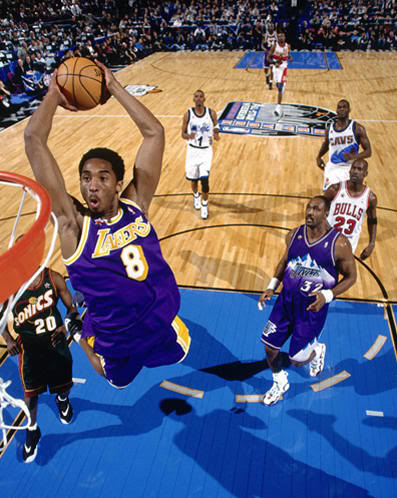
On the opposing side held youth and the future. "Go West, Young Man" had once been the cry throughout the country, and three of the NBA's newest talents seemed to have revived that call. Starting at shooting guard, the defensive matchup to Jordan, was the player most had tabbed to take his place as the new NBA mega star; Kobe Bryant. Bryant being a starter in this game was uncommon, as the 19 year old didn't even start on his Lakers squad. At the forward position was Kevin Garnett, Garnett, who had signed a six year, $128 million extension with Minnesota, was in his second All-Star Game at 21, when most players would still be a rookie on the bench. Of course, there would even be a rookie on the West's bench. Tim Duncan, in his first of many years in the NBA, would play the second fewest minutes of any player in the game, save for an injured Penny Hardaway.
For His Airness, this would be the 12th time he would be an NBA All-Star. For Bryant, Garnett, and Duncan, this was only the beginning. But for four players, this would be their only trip to the NBA's midseason exhibition. Nick Van Exel, who had been a second round pick, was known as "Nick The Quick" for his sprints to the basket. On Draft Day 1998, would be traded to the Nuggets, where his profile would be lowered. Jayson Williams manned the paint across the river for the Nets. His career would be cut short the next year by a broken leg. Williams would later become known for his legal battles. Rik Smits, pride of Eindhoven, Netherlands, was popular with Pacers fans and known as the "Dunking Dutchman". He retired two seasons after his All-Star appearance, but not before playing in the NBA Finals. Steve Smith was considered to be among the most underrated players of the decade. He would fail to make another All-Star Game, but won a championship and Olympic gold medal by the end of his career.
For most All-Star Games, the final score tends to be lopsided. This one was no different, with the East grabbing a commanding 21 point victory, But the score was never the primary concern in this game. Before the tip-off, the biggest question from the broadcast team of Bill Walton, Isiah Thomas, and Bob Costas was if Jordan would be able to catch Kareem Abdul-Jabbar's 251 All-Star Game points. While Jordan would score 23 points and be named MVP of the game, the main story to come out of the game was the play of Kobe Bryant, eager to show why he was the man to inherit MJ's throne. Bryant would total 18 points and six rebounds before being benched for the final quarter.
As the game began to wind down and players began to take shots that would get them benched in regular contests, talk began from the booth of what would happen to Jordan. Would he go off int the sunset? Would he join the host of the game, the Knicks? And what about the coming labor negotiations? The future might have looked murky from a 90's standpoint. For 90's stars Mitch Richmond, Glen Rice, Vin Baker, Shawn Kemp, and both the Hardaways (Penny and Tim), this would be the last All-Star appearance for them. But for those of a newer opinion, ones who saw promise in the play of Kobe, KG, and Duncan, this was only the beginning. In some ways, the 1998 All-Star Game was comparable to graduating high school; closing the door of an era of fun, but also ushering in an age of new blood and opportunity.

